
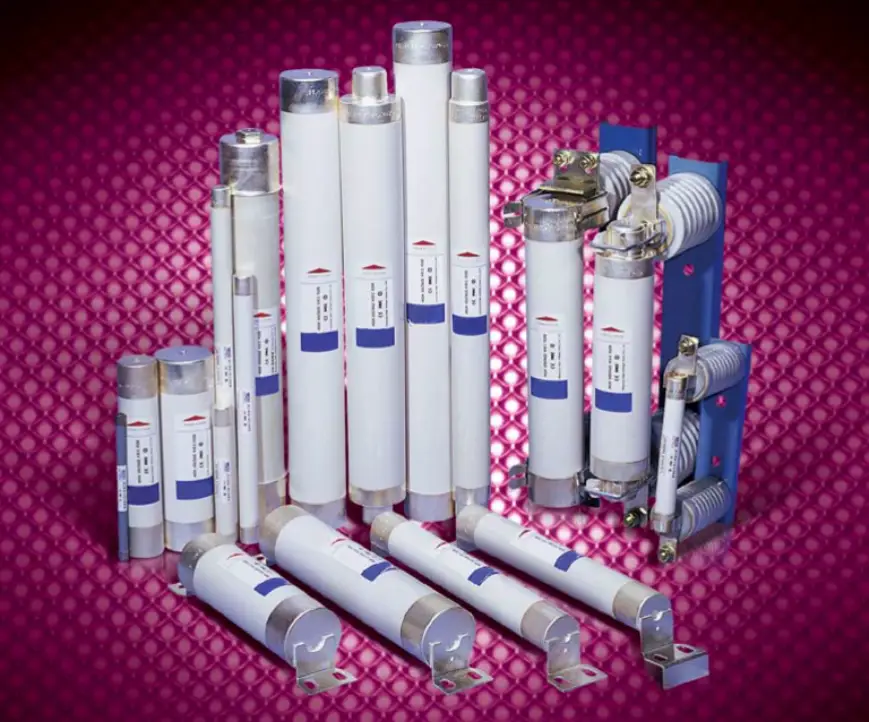
Model Meaning: A Single Character Difference, a World of Difference in Positioning
The models of the two products both follow the national standard naming specification, and each letter has a clear meaning.
At the same time, the model interpretation of XRNM and XRNK in the same series is extended to facilitate overall distinction:
X: Limited Current, with fast current limiting and high breaking capacity, which can cut off faults before the peak of short-circuit current, and is a common core feature of the XRN series;
R: Fuse, uniformly identifying the product category;
N: Indoor, not suitable for harsh outdoor environments, and all XRN series are indoor types;
XRNT·T: Special for Transformer Protection (Transformer), the core protected object is power transformer;
XRNP·P: Special for Potential Transformer Protection (PT/ Potential Transformer), the core protected object is potential transformer (PT);
XRNM·M: Special for Motor Protection (Motor), the core protected object is high-voltage motor;
XRNK·K: Special for Switchgear Busbar Protection (Busbar), the core protected objects are high-voltage switchgear busbars, cables and other power distribution lines.
Core Functions and Protected Objects: Professional Division of Labor, Each Performing Its Own Duties
1. XRNT: The “Overload Bodyguard” of Transformers
– Core Purpose: Special for overload and short-circuit protection of power transformers, and can also protect power equipment with similar characteristics (such as reactors);
– Protection Logic: Match the overload characteristics and short-circuit withstand capacity of the transformer, cope with faults such as inrush current during no-load closing of the transformer, load overload, and winding short-circuit, and have the dual characteristics of “avoiding inrush current and quickly cutting off short-circuit”;
– Supporting Equipment: Often used in conjunction with load switches and vacuum contactors to form combined electrical appliances, realizing the protection and control of the transformer circuit.
2. XRNP: The “Precision Guard” of Potential Transformers (PT)
– Core Purpose: Special for short-circuit and overload protection of potential transformers (PT), and also applicable to scenarios with high requirements for voltage measurement and protection accuracy, such as metering cabinets and PT+arrester combination cabinets;
– Protection Logic: The normal working current of the potential transformer is extremely small (mA level), and the fault current only appears when the secondary side is short-circuited or the insulation is broken down; XRNP needs to sensitively respond to small fault currents, and at the same time withstand small fluctuations in the normal operation of PT to avoid false fusing affecting measurement and protection;
– Installation Scenario: Almost only installed in PT cabinets and metering cabinets, it is the core protection component of high-voltage metering and voltage monitoring circuits.
3. Supplementary to the Same Series: Core Positioning of XRNM and XRNK
XRNM and XRNK, together with XRNP and XRNT, belong to the indoor high-voltage current-limiting fuse series, sharing the core advantages of “current limiting and high breaking capacity”, but their protected objects are more targeted to avoid confusion with the previous two:
•XRNM (Special for Motor Protection): Adapt to the starting and operating characteristics of high-voltage motors, with the characteristics of “resisting starting current impact and quickly cutting off short-circuit”. When the motor starts, the current can reach 5~8 times the rated current. The fuse element design of XRNM can avoid the starting impact current, and at the same time act in time when the motor is overloaded or the winding is short-circuited to prevent the motor from burning out; it is often used in conjunction with vacuum circuit breakers and contactors for motor control circuits.
•XRNK (Special for Busbar/Line Protection): Mainly used for short-circuit protection of high-voltage switchgear busbars and cable lines. The core requirement is “fast breaking and good current limiting effect”, which can effectively limit the impact of short-circuit current on busbars and cables and avoid fault expansion; the rated current range is between XRNP and XRNT, the breaking capacity is equivalent to XRNT, and it is installed at the busbar section and cable outlet end.
Differences in Appearance and Structure: Completely Different Sizes, Fuse Elements and Bases
Due to the differences in the current level and action characteristics of the protected objects, the four fuses in the XRN series have significant differences in physical form, especially XRNP and XRNT:
- Size Specifications (Taking 12kV System as an Example)
- XRNT: The fuse tube is larger (commonly used Φ76×292mm, Φ61×278mm). The higher the rated current, the thicker and longer the size, and the overall volume is the largest;
- XRNP: The fuse tube is small and slender (commonly used Φ25×192mm, Φ30×200mm), and the overall volume is only 1/3~1/2 of XRNT, which is the smallest in the series;
- XRNM: The size is between XRNP and XRNT (commonly used Φ51×278mm, Φ61×278mm), adapting to the installation space of the motor circuit;
- XRNK: The size is similar to XRNT (commonly used Φ76×292mm), and some specifications can share the base with XRNT (parameters need to be verified).
- Fuse Element Design
- XRNT: The fuse element is a low-resistance, large-section metal sheet/multi-strand parallel wire, which can withstand a rated current of 5~200A and has a delay characteristic of resisting inrush current;
- XRNP: The fuse element is a high-resistance, thin metal wire(commonly silver), with a rated current of only 0.5A, 1A, 2A, 3.15A, 6.3A, which is sensitive in action and can be quickly fused with small current;
- XRNM: The fuse element is a medium-section metal wire with a rated current of 10~100A, which has the characteristics of “delayed overload and quick-acting short-circuit” and can avoid the motor starting impact current;
- XRNK: The fuse element is a large-section metal sheet with a rated current of 31.5~200A, which has fast breaking speed, outstanding current limiting effect and focuses on short-circuit protection.
- Base and Installation
- XRNT, XRNK: Equipped with a special large-size base, the contact area of the contact is large, which is suitable for the large current flow demand, and the bases of some models with the same specification can be shared;
- XRNP: Equipped with a small special base, compact structure, suitable for the narrow installation space of PT cabinets, and completely not compatible with the other three bases;
- XRNM: Equipped with a medium-sized special base, the contact design is suitable for the current flow and breaking needs of the motor circuit, and is not compatible with XRNT and XRNK bases.
Key Reminder: The bases of the four fuses in the XRN series cannot be arbitrarily interchanged. Even if the sizes are similar, the rated current and contact specifications must be checked to avoid faults caused by poor contact and insufficient current flow.
Comparison of Core Technical Parameters (12kV System, Including Supplementary of Same Series)
| 参数维度
Parameter Dimension |
XRNT(变压器保护)
XRNT (Transformer Protection) |
XRNP(电压互感器保护)
XRNP (Potential Transformer Protection) |
XRNM(电动机保护)
XRNM (Motor Protection) |
XRNK(母线/线路保护)
XRNK (Busbar/Line Protection) |
| 额定电压
Tensión nominal |
3.6kV、7.2kV、12kV、40.5kV
3.6kV, 7.2kV, 12kV, 40.5kV |
3.6kV、7.2kV、12kV、40.5kV
3.6kV, 7.2kV, 12kV, 40.5kV |
3.6kV、7.2kV、12kV、40.5kV
3.6kV, 7.2kV, 12kV, 40.5kV |
3.6kV、7.2kV、12kV、40.5kV
3.6kV, 7.2kV, 12kV, 40.5kV |
| 额定电流
Corriente nominal |
5A~200A(主流:10A、16A、31.5A、63A、100A)
5A~200A (Mainstream: 10A, 16A, 31.5A, 63A, 100A) |
0.5A~6.3A(主流:0.5A、1A、2A)
0.5A~6.3A (Mainstream: 0.5A, 1A, 2A) |
10A~100A(主流:16A、31.5A、63A)
10A~100A (Mainstream: 16A, 31.5A, 63A) |
31.5A~200A(主流:63A、100A、160A)
31.5A~200A (Mainstream: 63A, 100A, 160A) |
| 分断能力
Breaking Capacity |
50kA~63kA(应对变压器大短路电流)
50kA~63kA (Coping with Large Short-Circuit Current of Transformer) |
31.5kA~50kA(满足PT小故障电流分断)
31.5kA~50kA (Meeting the Breaking of Small Fault Current of PT) |
50kA~63kA(应对电机短路电流)
50kA~63kA (Coping with Motor Short-Circuit Current) |
63kA~80kA(快速限流,保护母线/线路)
63kA~80kA (Fast Current Limiting, Protecting Busbar/Line) |
| 动作特性
Operating Characteristics |
延时型,避过变压器励磁涌流(5~10倍In,0.1~1s不熔断)
Delay type, avoiding transformer inrush current (5~10 times In, no fusing for 0.1~1s) |
灵敏速动型,小故障电流(1.3~2倍In)快速熔断
Sensitive and quick-acting type, fast fusing with small fault current (1.3~2 times In) |
延时过载、速动短路,避过电机启动电流(5~8倍In,0.5~2s不熔断)
Delayed overload and quick-acting short-circuit, avoiding motor starting current (5~8 times In, no fusing for 0.5~2s) |
速动型,短路电流(3~5倍In)快速分断,限流效果突出
Quick-acting type, fast breaking of short-circuit current (3~5 times In), outstanding current limiting effect |
| 适用标准
Applicable Standard |
GB15166.2、IEC60282-1
GB15166.2, IEC60282-1 |
GB15166.2、IEC60282-1
GB15166.2, IEC60282-1 |
GB15166.2、IEC60282-1
GB15166.2, IEC60282-1 |
GB15166.2、IEC60282-1
GB15166.2, IEC60282-1 |
| 熔管材质
Fuse Tube Material |
高强度陶瓷/环氧管,耐高温高压
High-strength ceramic/epoxy tube, high temperature and high pressure resistance |
高纯度氧化铝陶瓷,承压高、绝缘强
High-purity alumina ceramic, high pressure bearing and strong insulation |
高强度陶瓷管,抗冲击、耐高温
High-strength ceramic tube, impact resistance and high temperature resistance |
高强度环氧陶瓷管,耐短路电弧冲击
High-strength epoxy ceramic tube, resistant to short-circuit arc impact |
Selection and Application Misunderstandings: 4 Types of Absolutely Forbidden Errors (Including Same Series)
- Using XRNP to Replace XRNT, XRNM, XRNK
XRNP has an extremely small rated current and a weak fuse element. The normal working current of transformers, motors and busbars will fuse it, which is completely incompatible and will lead to frequent misoperations and failure to put the equipment into operation.
- Using XRNT and XRNK to Replace XRNP for PT Protection
XRNT and XRNK have large fuse element cross-sections and delayed actions. When the PT secondary side is short-circuited, theycannot be fused in time, which will lead to PT winding burnout, insulation breakdown, and even cabinet short-circuit and busbar faults.
- Using XRNM and XRNK to Replace XRNT for Transformer Protection, or Using XRNT to Replace XRNM for Motor Protection
– The inrush current of the transformer is different from the starting current characteristics of the motor. The delay characteristic of XRNM cannot adapt to the transformer, which will lead to false fusing; the inrush current resistance design of XRNT cannot avoid the motor starting current, which will burn the motor;
– XRNK focuses on quick-acting short-circuit protection and has no inrush current resistance characteristic, so it will cause frequent misoperations when used for transformer protection.
- Ignoring the Matching of Current Level and Operating Characteristics
- XRNT: It should be selected according to 5~2 timesthe rated current of the transformer (for example, for a 1000kVA/10kV transformer with a rated current of 57.7A, select 63A or 80A XRNT);
- XRNP: Strictly select according to the rated current of PT, prefer 0.5A or 1A(the short-circuit fault current on the PT secondary side is usually only 1~3A, and the small current specification has more accurate protection);
- XRNM: Select according to 2~1.5 timesthe rated current of the motor, and confirm the motor starting current multiple to avoid fusing during startup due to too small selection;
- XRNK: Select according to the rated current of the busbar/line, and the breaking capacity must match the system short-circuit current to avoid fault expansion caused by insufficient breaking capacity.
Power protection is no trivial matter. Although the XRN series fuses all belong to indoor high-voltage current-limiting products, they have clear professional division of labor and significant differences in parameters and structures and cannot be arbitrarily replaced. When selecting, it is necessary to check the protected object, rated current, installation size and operating characteristics, and accurately match them with the system parameters to avoid equipment damage and power grid faults caused by wrong selection from the source.



 Spanish
  English
  Russian
  Portuguese
  Vietnamese
  Thai
Thai  Arabic
  Indonesian