
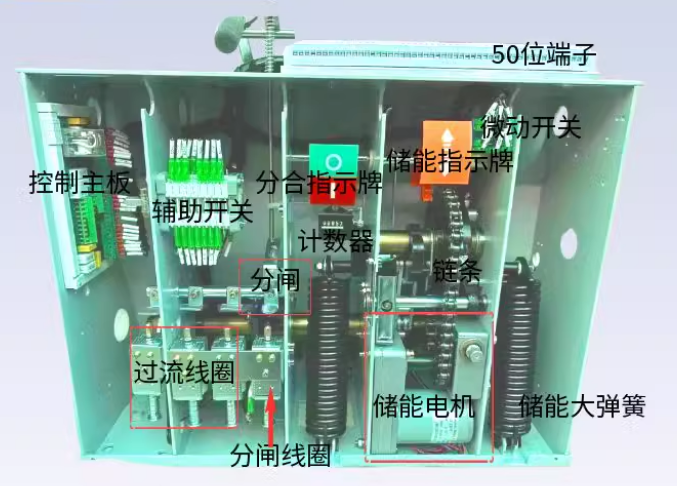
In the realm of power distribution systems, VS1 vacuum circuit breakers stand out for their reliability, compact design, and excellent arc-extinguishing performance. As critical devices for protecting electrical equipment and ensuring grid stability, their seamless operation relies heavily on a suite of high-quality accessories. Whether you’re an electrical engineer, a maintenance technician, or simply someone interested in power system components, understanding these accessories is essential to grasping how VS1 vacuum circuit breakers deliver consistent performance. In this blog, we’ll break down the core accessories of VS1 vacuum circuit breakers, exploring their roles, characteristics, and key specifications.
1. Operating Mechanism Accessories: The “Power Engine” of Circuit Breakers
The operating mechanism is the heart of a VS1 vacuum circuit breaker, responsible for providing the necessary force to achieve closing and opening operations. There are two main types of operating mechanism accessories commonly used: spring operating mechanisms and permanent magnet operating mechanisms.
Spring operating mechanisms rely on energy-storing springs to drive the opening and closing actions. Key components within this mechanism include energy-storing motors, closing springs, opening springs, connecting rods, and crank arms.
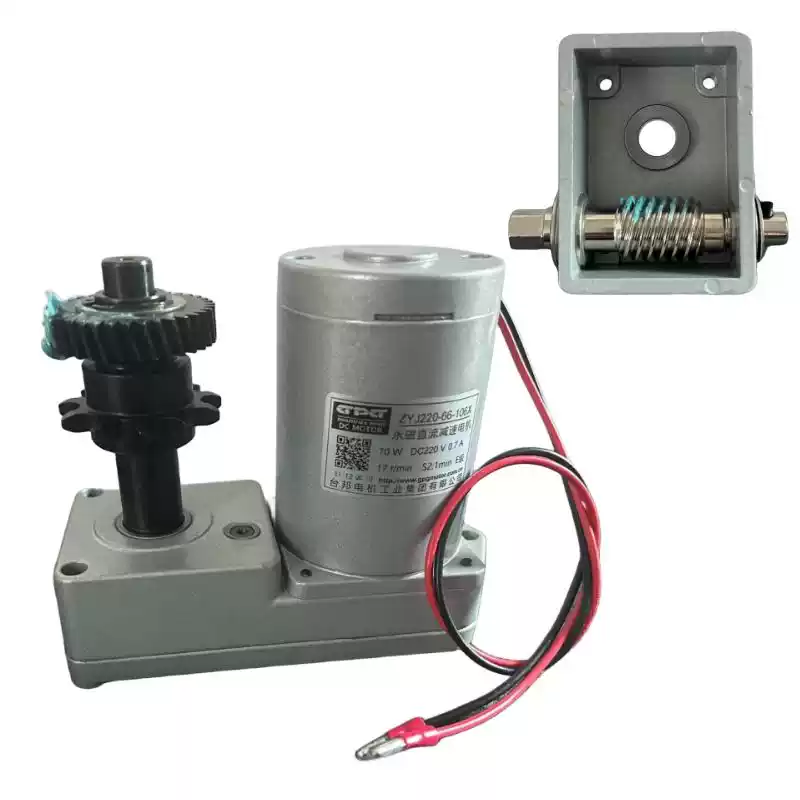
The energy-storing motor is tasked with compressing the closing spring to store mechanical energy; when a closing signal is received, the spring releases its energy to drive the closing action. Similarly, the opening spring is pre-charged and releases energy to complete the opening operation when needed. This type of mechanism is widely favored for its mature technology and stable performance in medium-voltage applications.
Permanent magnet operating mechanisms, on the other hand, utilize the magnetic force of permanent magnets to maintain the circuit breaker’s closing and opening states. Compared to spring mechanisms, they feature a simpler structure with fewer moving parts, which significantly reduces the risk of mechanical failures and improves overall reliability. They also consume less energy during operation—only requiring power input during the brief opening and closing processes, while relying on permanent magnets to hold the position at other times. This energy-saving advantage makes them increasingly popular in modern power systems.
2. Contact System Accessories: Ensuring Efficient Current Conduction
The contact system is a critical conductive component of VS1 vacuum circuit breakers, responsible for connecting and disconnecting the circuit. The core accessories in this system are plum-blossom contacts and contact arms.
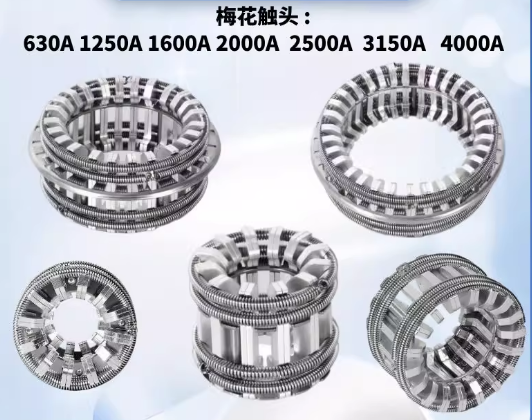
Plum-blossom contacts are used to connect the circuit breaker’s truck and static contacts, playing a key role in ensuring stable current transmission. They come in various specifications based on rated current, including 630A, 1250A, 1600A, 3150A, and 4000A, to meet different application requirements. A typical plum-blossom contact consists of contact pieces, a support frame, and tension springs. The contact pieces are usually made of T2 red copper with a silver plating finish—silver plating enhances electrical conductivity, reduces contact resistance, and improves corrosion resistance, thereby extending the service life of the contacts.
Contact arms serve as the conductive link between the vacuum interrupter and the plum-blossom contacts. Generally made of high-purity copper materials, they are designed to withstand high current loads and minimize energy loss during current transmission. The design of contact arms also takes into account mechanical strength, ensuring they can withstand the mechanical stress generated during opening and closing operations.
3. Insulation Accessories: Safeguarding Electrical Isolation
Insulation performance is a key factor in ensuring the safe operation of VS1 vacuum circuit breakers, and insulation accessories play a vital role in preventing electrical breakdown and short circuits. The main insulation accessories include insulation cylinders and insulation pull rods.
Insulation cylinders are typically made of epoxy resin and manufactured using the APG (Automatic Pressure Gelation) process. This process ensures uniform material density, excellent insulation performance, and high mechanical strength. The primary function of insulation cylinders is to enclose and protect the vacuum interrupter, isolating it from the external environment and preventing accidental contact with live parts. Epoxy resin materials also offer good resistance to aging and moisture, making them suitable for a wide range of operating environments.

Insulation pull rods are used to connect the operating mechanism and the moving contacts of the vacuum interrupter. Their dual role is to transmit the mechanical force from the operating mechanism to the moving contacts (enabling opening and closing) while maintaining electrical insulation between the operating mechanism and the conductive parts. High-quality insulation pull rods are made of materials such as glass fiber-reinforced epoxy resin, which combines excellent insulation properties with high mechanical toughness to withstand repeated mechanical stress.
4. Opening and Closing Coils: The “Control Switch” of Operations
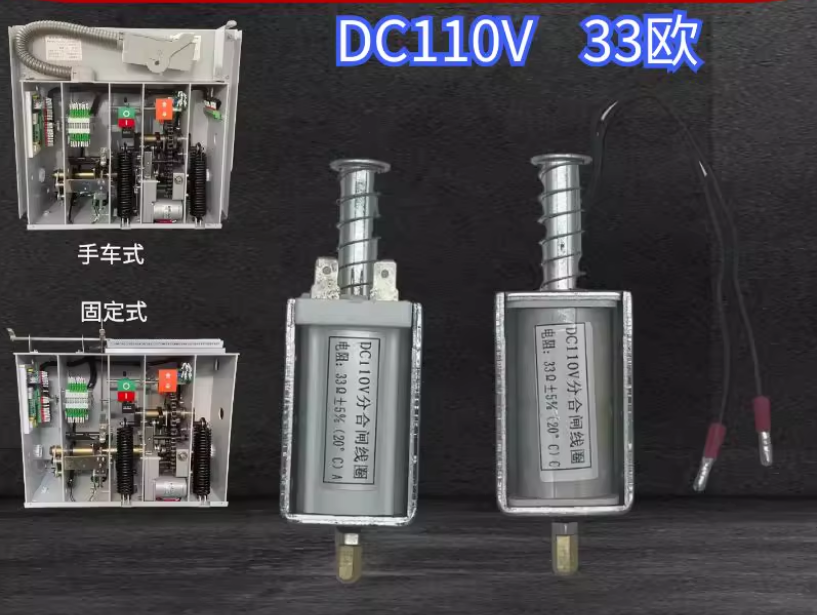
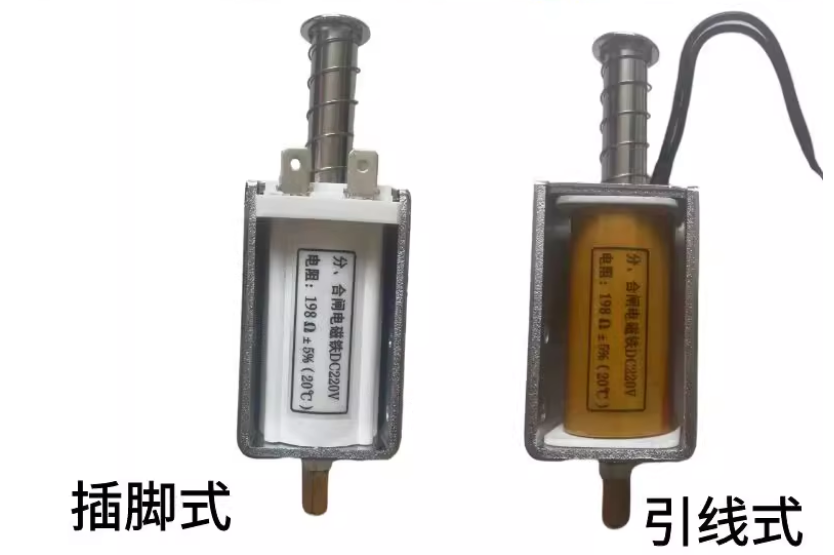
Opening and closing coils are key control components that trigger the operation of the VS1 vacuum circuit breaker. When an electrical signal is applied to the coil, it generates an electromagnetic force that drives the operating mechanism to actuate, completing either the opening or closing operation.
These coils are available in both DC (Direct Current) and AC (Alternating Current) versions, with common rated voltages including DC110V, DC220V, and AC220V. The selection of coil type and voltage depends on the specific requirements of the power system’s control circuit. It’s important to note that opening and closing coils are designed for short-time operation—they should not be energized continuously for extended periods, as this can cause overheating and damage to the coil windings.
5. Buffer Devices: Reducing Impact and Extending Lifespan

During the opening and closing processes of a VS1 vacuum circuit breaker, significant mechanical impact forces are generated. Buffer devices are designed to absorb the residual energy from these operations, reducing the impact on the circuit breaker’s components and improving operational stability.
There are two main types of buffer devices: closing buffers and opening buffers. Closing buffers absorb the impact energy when the circuit breaker closes, preventing excessive wear on the contacts and other mechanical parts. Opening buffers, on the other hand, dampen the impact during the opening operation, ensuring a smooth and controlled movement of the moving parts. By reducing mechanical stress, buffer devices effectively extend the service life of the VS1 vacuum circuit breaker and enhance its long-term reliability.
6. Other Essential Accessories
In addition to the core accessories mentioned above, VS1 vacuum circuit breakers also rely on a range of auxiliary components to ensure full functionality and ease of operation:
-
Secondary Components: Buttons, indicator lights, and auxiliary switches are key secondary components. Buttons are used for manual opening and closing operations; indicator lights (usually red for opening and green for closing) provide visual feedback on the circuit breaker’s operating status. Auxiliary switches, meanwhile, convert the mechanical position signals of the circuit breaker (open or closed) into electrical signals, which are transmitted to the secondary control circuit for monitoring and interlocking purposes.
-
Conductive Accessories: Busbars and flexible connections are essential for current transmission. Busbars are used to connect the circuit breaker to the power system, while flexible connections (typically made of copper foil or braided copper wire) accommodate the slight movement of the circuit breaker’s moving parts during operation, ensuring continuous and stable current conduction.
Conclusion: The Importance of High-Quality Accessories
Each accessory of a VS1 vacuum circuit breaker plays a unique and indispensable role in its overall performance. From the operating mechanism that provides power to the contact system that ensures current conduction, from the insulation accessories that safeguard safety to the control components that trigger operations—all work together to enable the circuit breaker to protect electrical equipment and maintain grid stability. When selecting or maintaining VS1 vacuum circuit breakers, it’s crucial to prioritize high-quality accessories, as they directly impact the reliability, safety, and service life of the entire device.
Whether you’re upgrading an existing power system, performing maintenance, or selecting components for a new project, understanding these accessories will help you make more informed decisions—and choosing our premium VS1 vacuum circuit breaker accessories is the best way to ensure optimal performance, safety, and longevity. We offer a complete range of high-quality accessories, from operating mechanisms to secondary components, all engineered to meet strict industry standards and perfectly compatible with VS1 vacuum circuit breakers. Ready to enhance your power system’s reliability? Contact our team today to learn more about our products, get personalized recommendations, and place your order. We’re here to support your needs with top-tier products and exceptional service!



 English
  Russian
  Spanish
  Portuguese
  Vietnamese
  Thai
Thai  Arabic
  Indonesian